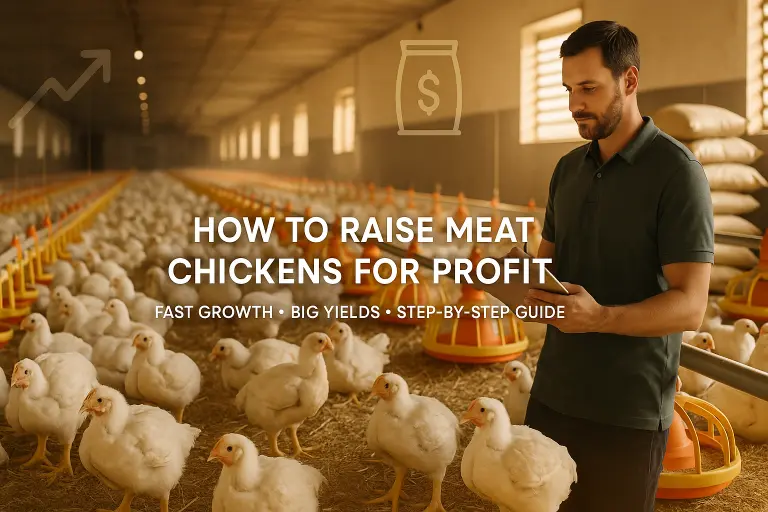
The demand for local, organic, and ethically raised meat is growing fast. More people now see poultry farming as a way to earn income and live sustainably. Learning how to raise meat chickens brings the best of both worlds — self-sufficiency and profit. You can feed your family fresh, healthy meat while building a small business from home. Meat chickens grow quickly, need little space, and produce excellent yields when cared for properly. In this guide, you’ll learn everything from breed selection to feeding, housing, and marketing. With the right approach, your flock can become a reliable source of food and financial growth.
Understanding Meat Chicken Breeds
Choosing the right breed is the first major decision when learning how to raise meat chickens. Different breeds grow at different rates, respond uniquely to feed, and produce distinct meat qualities. The right choice depends on your goals — whether you’re focused on fast turnover for profit or a balanced approach that values flavor and sustainability.
Broilers vs. Dual-Purpose Breeds — Differences in Growth Rate and Feed Efficiency
Broilers, like the Cornish Cross, are bred for rapid growth and high meat yield. They reach market weight in as little as 6 to 8 weeks, making them ideal for commercial production. However, their fast growth demands careful feed management and good ventilation to prevent leg or heart issues.
Dual-purpose breeds grow more slowly but are hardier and more active. They provide both meat and eggs, making them a great fit for small farms or homesteads that value versatility over speed.
Best Breeds for Meat Production
Cornish Cross — The industry favorite for its unmatched growth speed and breast yield. Perfect for commercial growers who prioritize efficiency, though they require close monitoring due to health sensitivity.
Red Ranger — A strong, active bird with slower growth but excellent flavor and muscle tone. It thrives in free-range or semi-pastured systems, making it ideal for farmers targeting quality over volume.
Freedom Ranger — Suited for pasture-raised setups, these chickens grow steadily with balanced feed conversion. They’re resilient, adaptable, and produce tender, flavorful meat.
Pros and Cons Summary:
- Cornish Cross: ✅ Fast growth, high yield | ❌ Health risks, limited mobility
- Red Ranger: ✅ Rich flavor, hardy | ❌ Slower growth
- Freedom Ranger: ✅ Great for pastures, balanced performance | ❌ Moderate yield compared to Cornish Cross
Choosing wisely ensures your flock aligns with your goals — whether rapid returns, premium flavor, or sustainable production.

Planning Your Meat Chicken Operation — How to Raise Meat Chickens for Profit
Before diving in, take time to plan your setup. Success in how to raise meat chickens depends on balancing your goals, available space, and resources. Whether you’re raising a few birds for your family or scaling up for steady income, clarity in planning will save time, money, and stress down the road.
Choosing the Right Scale — Backyard or Small Commercial Meat Chicken Farm
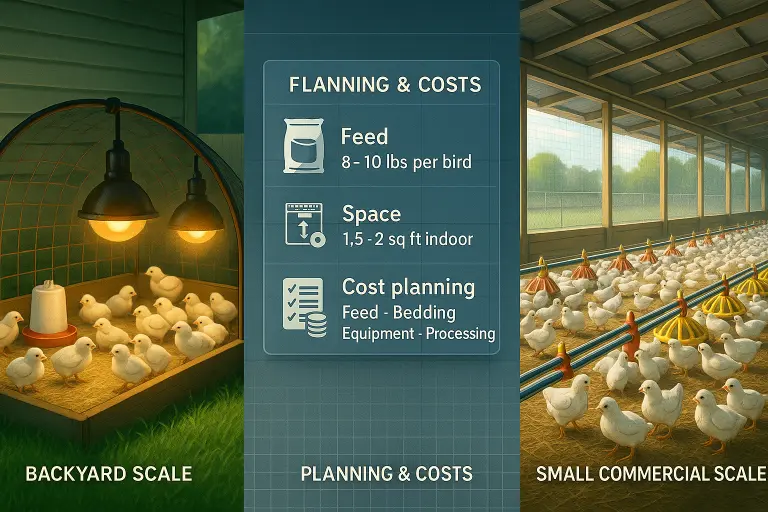
Backyard meat chicken projects suit beginners who want to learn the basics while feeding their household. You can start with 25–50 chicks and expand once you gain confidence. A small commercial setup, on the other hand, focuses on efficiency and profit. With 200–500 birds per batch, you can generate consistent revenue, but it requires investment in housing, equipment, and biosecurity.
Estimating Feed, Space, and Costs Before You Raise Meat Chickens
Feed is your biggest expense when learning how to raise meat chickens efficiently. On average, a broiler consumes about 8–10 pounds (3.5–4.5 kg) of feed before reaching market weight. You’ll also need 1.5–2 square feet of space per bird in indoor setups, or more for pasture systems. Budget for feed, bedding, equipment, and processing — and always include a small buffer for unexpected costs.
Essential Equipment for Raising Meat Chickens — Feeders, Waterers, and Housing Setup
To raise healthy, fast-growing birds, you’ll need a few essentials:
- Feeders and waterers: Ensure easy access and cleanliness to promote steady growth.
- Heat lamps or brooders: Keep chicks warm (around 32–35°C / 90–95°F) for the first two weeks.
- Ventilated housing: Use dry bedding and allow airflow to prevent respiratory issues.
- Protective fencing: Keeps predators away and reduces stress in outdoor systems.
A well-planned setup transforms your chicken-raising journey from guesswork into a profitable, repeatable system.
Setting Up the Brooder for Meat Chicks — The First Step in How to Raise Meat Chickens Successfully
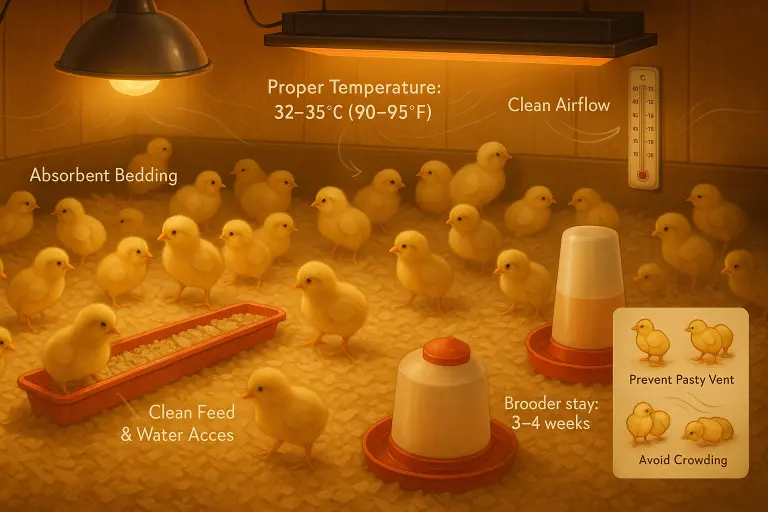
The brooder is where your chicks take their first steps toward becoming healthy, fast-growing meat birds. A well-prepared brooder ensures warmth, safety, and comfort — the essentials of how to raise meat chickens effectively from day one. Getting this stage right sets the foundation for strong growth and fewer health problems later on.
Temperature, Bedding, and Lighting Requirements
Start by keeping the brooder temperature at 32–35°C (90–95°F) during the first week, then lower it by about 3°C (5°F) each week until the chicks are fully feathered. Use a reliable thermometer to monitor temperature at chick level — not just in the air.
Choose absorbent bedding like pine shavings or chopped straw to keep the area dry and reduce odor. Avoid slippery surfaces that can cause leg deformities. Provide constant, soft lighting for the first few days to help chicks find food and water, then switch to a day-night cycle for natural rest and growth.
How Long Chicks Stay in the Brooder
Typically, chicks remain in the brooder for 3 to 4 weeks, depending on the weather and feather development. Once they are fully feathered and can regulate their own body temperature, they’re ready to move to a grow-out pen or pasture area. In colder climates, extending brooder time by an extra week can help prevent chilling and stress.
Preventing Common Early-Stage Issues
Early-stage problems can set back growth or even lead to losses if not managed carefully:
- Pasty vent: Caused by temperature stress or dehydration — clean gently and ensure constant access to clean water.
- Crowding: Overcrowded brooders cause stress and uneven growth; allow at least ½ square foot per chick early on.
- Poor ventilation: Stale air leads to respiratory issues — keep airflow steady but avoid drafts.
A well-managed brooder doesn’t just keep chicks alive — it gives them the strong, healthy start every profitable flock depends on.
Feeding Meat Chickens for Fast Growth — Essential Steps in How to Raise Meat Chickens Efficiently
Nutrition is the engine that drives healthy, rapid growth in meat chickens. If you want to master how to raise meat chickens for profit, understanding their dietary needs at each stage is crucial. The right feed not only accelerates growth but also improves meat quality, feed efficiency, and overall flock health.
Nutritional Requirements by Growth Stage
Feeding programs for broilers and meat breeds are divided into three main phases:
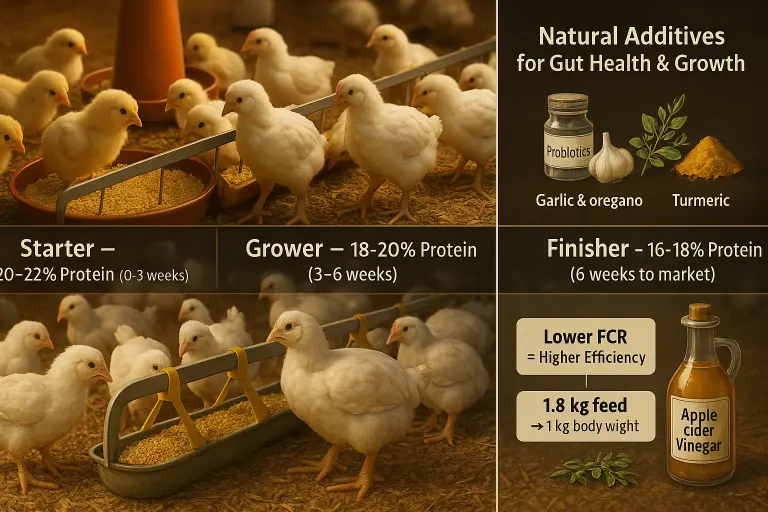
- Starter Feed (0–3 weeks): High in protein (20–22%) to support early muscle and feather growth. Use fine crumble feed so chicks can eat easily.
- Grower Feed (3–6 weeks): Moderate protein (18–20%) with higher energy content to maintain steady weight gain.
- Finisher Feed (6 weeks to market): Slightly lower protein (16–18%) but rich in carbohydrates and fats for final weight and tenderness.
Always ensure constant access to clean water, as proper hydration improves feed digestion and absorption.
Feed Conversion Ratio (FCR) Explained — How to Get the Best Meat Yield per Kilogram of Feed
The Feed Conversion Ratio (FCR) measures how efficiently your chickens turn feed into body weight. It’s calculated by dividing the total feed consumed by the total weight gained. For example, an FCR of 1.8 means it takes 1.8 kg of feed for every 1 kg of chicken weight.
Lower FCR values indicate better efficiency — a key profit factor when learning how to raise meat chickens for business. Maintain consistent lighting, provide high-quality feed, and keep birds stress-free to achieve top performance.
Natural Feed Additives for Better Growth
Natural supplements can improve gut health, immunity, and feed efficiency:
- Probiotics: Balance gut bacteria, enhance digestion, and reduce disease risk.
- Herbs (garlic, oregano, turmeric): Support immunity and appetite naturally.
- Apple Cider Vinegar: Improves water quality and boosts nutrient absorption when added in small amounts (1–2 tablespoons per gallon).
Avoid overfeeding or using unbalanced homemade mixes — excess protein or fat can lead to health issues or uneven growth. When feed management is optimized, your flock grows faster, stays healthier, and delivers bigger, more profitable yields.
Ideal Housing and Space Requirements — Creating the Perfect Environment to Raise Meat Chickens
A well-designed housing setup is vital for anyone learning how to raise meat chickens successfully. Proper ventilation, space, and lighting not only promote faster growth but also prevent disease and stress. Whether you choose indoor confinement or a pasture-based system, your goal is the same — to provide comfort, cleanliness, and consistency.
Broiler House Design — Ventilation, Flooring, and Lighting
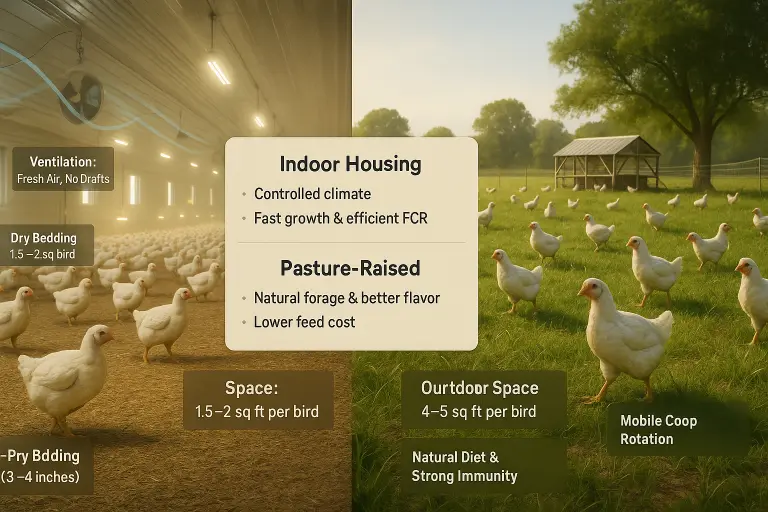
Good ventilation keeps the air fresh and removes moisture and ammonia buildup, which can cause respiratory issues. Use adjustable vents or fans to maintain steady airflow without drafts.
For flooring, choose materials that stay dry and easy to clean. Many farmers use wood shavings or rice hulls as bedding — both are absorbent and reduce odor. Keep the litter depth around 3–4 inches and stir it regularly to avoid compaction.
Proper lighting encourages healthy feeding and activity. Maintain about 18–20 hours of light per day during early growth, then reduce to 14–16 hours as chickens mature to prevent stress and overfeeding.
Density Guidelines — Space Requirements for Healthy Growth
Space directly affects bird health and weight gain. Overcrowding leads to heat stress, slow growth, and higher disease risk. For indoor systems, allow at least 1.5 to 2 square feet per bird. If you’re raising heavier breeds like Cornish Cross, lean toward the higher end of that range.
In pasture-based systems, provide 4–5 square feet per bird outdoors, along with shaded areas for rest. Mobile coops or “chicken tractors” work well, allowing you to rotate flocks across fresh grass to improve soil and reduce parasite buildup.
Indoor vs. Pasture-Raised Systems — Pros and Cons
Indoor Housing
✅ Controlled environment and temperature
✅ Faster growth and efficient feed use
❌ Higher equipment and energy costs
❌ Requires strict cleaning and ventilation management
Pasture-Raised Systems
✅ Natural diet, better flavor, and stronger immunity
✅ Lower feed costs and improved animal welfare image
❌ Slower growth rate and higher predator risk
Each housing style serves a different goal. Choose based on your climate, land availability, and market — whether that’s volume-driven commercial production or premium pasture-raised poultry.
Health Management and Biosecurity — Keeping Meat Chickens Strong and Profitable
Healthy chickens grow faster, eat better, and deliver higher-quality meat. That’s why strong health management is at the heart of how to raise meat chickens successfully. A single outbreak of disease can wipe out profits, so prevention and daily care are far more effective than cure.
Common Meat Chicken Diseases
Coccidiosis: A parasitic disease that spreads quickly in damp, dirty litter. Symptoms include bloody droppings, lethargy, and reduced feed intake. Prevent it with dry bedding, proper ventilation, and coccidiostat feed additives when necessary.
Respiratory Infections: Often caused by poor air circulation or high ammonia levels. Watch for coughing, nasal discharge, or slow growth. Regularly clean housing and maintain good airflow to keep respiratory issues under control.
Leg Problems: Fast-growing breeds like Cornish Cross are prone to joint or bone issues due to rapid weight gain. Providing adequate space, balanced nutrition, and dry flooring reduces the strain on their legs.
Preventive Measures for Raising Meat Chickens Safely
Prevention is the backbone of effective poultry health management:
- Clean litter: Replace wet bedding often to control bacteria and parasites.
- Vaccination schedule: Consult your local vet or extension office for recommended vaccines against common diseases like Newcastle and Marek’s.
- Safe water sources: Use clean, cool water daily and sanitize drinkers regularly to prevent contamination.
Adding natural immune boosters such as garlic or apple cider vinegar can also help improve disease resistance in small flocks.
Stress Reduction and Humane Handling Practices
Stress weakens immunity and slows growth. Keep noise levels low, avoid sudden temperature changes, and handle birds calmly. Provide shaded areas and avoid overcrowding to minimize competition and injury.
When learning how to raise meat chickens for profit, remember — healthy, well-cared-for birds not only grow faster but also produce superior-quality meat that consumers will trust and return for.
Monitoring Growth and Performance
Learning how to raise meat chickens doesn’t stop at feeding and housing — consistent monitoring is what separates hobbyists from profitable producers. Tracking growth allows you to spot problems early, fine-tune nutrition, and keep your flock on target for optimal market weight.
Weekly Weighing and Growth Benchmarks
Weighing your chickens weekly gives you a clear picture of progress and efficiency. Start when chicks are one week old and continue until they reach market age. Use a simple digital scale and record average weights from a small, random sample of birds (5–10% of your flock).
Here’s a general benchmark for fast-growing breeds like the Cornish Cross under good management:
| Age (Weeks) | Average Weight (kg) | Notes |
|---|---|---|
| 1 | 0.15–0.20 | Healthy chicks, active and alert |
| 2 | 0.35–0.45 | Feathers developing, steady appetite |
| 3 | 0.70–0.90 | Rapid growth phase begins |
| 4 | 1.20–1.40 | Increase ventilation and space |
| 5 | 1.80–2.10 | Monitor leg strength and litter dryness |
| 6 | 2.50–2.80 | Near market weight — reduce light hours slightly |
| 7–8 | 3.0–3.5 | Market-ready birds, depending on target size |
Tracking weekly weights helps you adjust feed schedules or environment before performance dips. Consistency in growth is a reliable indicator of flock health and management quality.
Signs of Underfeeding or Disease
If your chickens lag behind benchmarks, it’s crucial to determine whether the issue is nutritional, environmental, or health-related. Key warning signs include:
- Uneven growth: Some birds gaining much faster than others — often caused by feed competition or crowding.
- Low feed or water intake: Could indicate poor feed quality, bad-tasting water, or illness.
- Pale combs and droopy posture: Common signs of anemia, heat stress, or nutrient deficiency.
- Wet litter or strong ammonia odor: Signals digestive imbalance or poor ventilation, which can slow growth.
- Loose droppings or bloody stool: May indicate coccidiosis or bacterial infections needing immediate attention.
Quick intervention is critical — correcting minor imbalances early can save weeks of lost growth.
How to Adjust Diet and Environment for Maximum Weight Gain
To get the best returns in your meat chicken operation, fine-tune the two biggest performance drivers: feed quality and environmental comfort.
Diet Adjustments:
- Boost protein early: If chicks appear small or slow, increase starter feed protein by 1–2% temporarily.
- Add energy sources: Incorporate small amounts of corn or soybean oil during the grower phase to enhance calorie intake.
- Use grit or probiotics: Aid digestion and nutrient absorption naturally.
- Ensure 24/7 feed access: Even brief feed shortages can affect growth curves.
Environmental Adjustments:
- Maintain optimal temperature — overheating or chilling reduces feed conversion.
- Keep litter dry and soft to prevent stress and leg problems.
- Improve ventilation if birds pant or seem restless.
- Reduce stocking density if uneven sizes persist across the flock.
When managed precisely, these adjustments can improve Feed Conversion Ratios (FCR) by 5–10%, translating into higher profit margins and healthier birds.
Processing and Butchering Meat Chickens
Once your birds reach market weight, it’s time for the final and most sensitive stage of learning how to raise meat chickens — processing. Whether you’re raising chickens for your family or for profit, this phase determines both the quality of your meat and your reputation for ethical, food-safe production.
When to Process — Average 6–8 Weeks for Cornish Cross
Timing is everything. Cornish Cross broilers are typically ready for processing between 6 and 8 weeks of age, when they reach around 2.5–3.5 kg (5.5–7.5 lbs). Waiting too long leads to excess fat, tougher meat, and higher feed costs — all of which cut into profits.
Slower-growing breeds like Freedom Rangers or Red Rangers are usually processed between 9 and 12 weeks, depending on your target market and preferred meat texture.
To check readiness:
- Feel the breast — it should be broad and well-filled.
- Monitor feed conversion — if weight gain slows while feed use stays high, it’s time to process.
- Observe feather condition — fully feathered birds near their target weight are ready for harvest.
On-Farm vs. Licensed Processing Options
You have two main choices for butchering your chickens — do it yourself on the farm or use a licensed processing facility. Each option carries trade-offs in cost, control, and legal compliance.
On-Farm Processing
✅ Pros:
- Full control over timing, hygiene, and handling.
- Lower per-bird cost once equipment is purchased.
- Ideal for small batches or self-sufficiency.
❌ Cons:
- Time-intensive and physically demanding.
- Requires strict sanitation to prevent contamination.
- Local regulations may limit on-farm meat sales.
If you choose this route, check your local agricultural or food safety authority for regulations — many regions allow small-scale producers to process and sell a limited number of birds per year without a commercial license.
Licensed Processing Facilities
✅ Pros:
- Professionally inspected and approved for retail sales.
- Consistent, legally compliant output for larger-scale operations.
- Reduced labor and liability for the farmer.
❌ Cons:
- Processing fees ($3–$6 per bird on average).
- Transportation stress can affect meat quality if not managed carefully.
- Less flexibility in timing and scheduling.
For anyone serious about scaling up, partnering with a reliable facility can streamline operations and boost consumer confidence in your product.
Hygiene, Humane Slaughter, and Meat Cooling Methods
Proper handling during slaughter ensures quality meat and animal welfare — both vital to long-term success and ethical integrity.
Humane Slaughter Practices:
- Handle birds calmly and avoid rough movement before processing.
- Use a cone or cradle to secure the chicken and minimize stress.
- Perform a swift, precise cut to the carotid arteries to ensure an immediate and humane kill.
Hygiene and Sanitation:
- Sterilize all knives, tables, and tools before and after each use.
- Use potable water for scalding, rinsing, and washing.
- Keep feathers, offal, and waste away from clean areas to prevent cross-contamination.
Meat Cooling and Storage:
Rapid cooling is crucial to preserve texture and prevent bacterial growth. Immediately after processing:
- Submerge carcasses in ice-cold water (0–4°C / 32–39°F) for at least 30 minutes.
- Drain, then refrigerate at below 4°C (40°F) for 12–24 hours to allow rigor mortis to complete.
- For freezing, vacuum-seal and freeze at –18°C (0°F) or lower for long-term storage.
Quality, freshness, and cleanliness are your selling points. Consumers notice the difference between rushed, poorly handled meat and carefully processed birds raised and harvested with respect.
Marketing and Selling for Profit
Raising healthy, fast-growing birds is only half the journey in mastering how to raise meat chickens for profit — the other half is turning your hard work into sustainable income. Smart marketing, transparent branding, and accurate cost management make the difference between a hobby and a thriving small business.
Calculating Production Costs and Profit Margins
Before you sell your first bird, you need to know exactly what it costs to raise it. Without clear numbers, it’s impossible to price correctly or scale profitably.
Main cost categories include:
- Chick purchase: Depending on breed and supplier, prices range from $1.50–$3.00 per chick.
- Feed: The largest expense — expect $0.60–$1.00 per kg of feed, totaling about $6–$8 per bird for broilers.
- Housing and equipment: Includes brooders, feeders, lamps, fencing, and litter. Spread this cost over multiple batches to find a realistic per-bird expense.
- Utilities and bedding: Heating, electricity, and bedding replacement can add another $0.50–$1.00 per bird.
- Processing: On-farm processing costs time and labor; licensed facilities charge $3–$6 per bird on average.
- Labor and time: Even if it’s your own, assign a fair value to your hours to measure true profitability.
Once total costs are calculated, add a 30–50% profit margin to determine your selling price. For example, if it costs $10 to raise and process one bird, your retail price should land between $13–$15 for standard broilers — and higher for premium pasture-raised or organic chickens.
Track feed conversion, mortality rates, and processing yields each batch. Over time, these numbers will reveal where you can cut waste, boost efficiency, and grow profits.
Where to Sell Meat Chickens
Your sales channel determines both your price point and your relationship with customers. Choose outlets that align with your scale, branding, and regulatory setup.
1. Local Farmers’ Markets
A favorite for small producers — direct contact with customers builds trust and allows you to tell your farm’s story. Premium pricing is possible if you emphasize freshness and ethical practices.
2. Restaurants and Cafés
Partner with local chefs or farm-to-table restaurants that value flavor and quality. They often pay higher prices for consistent, clean, pasture-raised meat — but require reliable supply and proper labeling.
3. Direct Farm Sales
Selling from your farm gate or through community-supported agriculture (CSA) programs lets you keep more profit by cutting out middlemen. Offer pre-orders to manage demand and reduce overproduction risk.
4. Online Orders and Local Delivery
An increasingly popular model. Use social media or a simple website to promote your products, highlight reviews, and manage pick-up or delivery schedules. Always check local regulations for online meat sales and delivery.
Branding and Building Customer Trust
Your brand tells buyers why your meat is worth choosing. Even small farms can stand out with honest messaging and visual consistency.
Branding Ideas That Resonate:
- “Pasture-Raised” – signals natural living conditions and ethical animal care.
- “Farm-Fresh” – evokes quality, taste, and locality.
- “Organic” – a strong trust signal if certified; otherwise, use “naturally raised” or “chemical-free.”
To reinforce credibility:
- Share photos and short videos of your flock and farm environment.
- Post testimonials and stories from returning customers.
- Offer tasting samples at markets or community events.
- Educate buyers about your process — transparency builds loyalty.
Repeat customers come not just for flavor, but for trust. When they know who raised their food and how, they’ll keep coming back — and bring others with them.
Scaling Up Your Meat Chicken Business
Once you’ve mastered the basics of how to raise meat chickens profitably on a small scale, the next step is growth — transforming your side venture into a reliable source of income. Scaling up requires strategy, reinvestment, and partnerships that increase efficiency without sacrificing animal welfare or product quality.
Reinvesting Profits into Better Infrastructure
Every successful poultry business grows by reinvesting early profits into systems that improve productivity and reduce labor. Instead of expanding too quickly, focus on strengthening your foundation:
- Upgrade housing and equipment: Replace makeshift brooders with durable, well-insulated structures. Invest in automatic feeders, waterers, and temperature control to save time and minimize errors.
- Enhance biosecurity: Build proper entry zones, handwashing stations, and predator-proof fencing. Health management becomes exponentially more critical as flock size increases.
- Expand feed storage: Larger feed bins or silos let you buy in bulk, lowering your per-unit cost and protecting feed quality.
Strategic reinvestment compounds your results — every improvement you make reduces losses, stabilizes performance, and frees up time for planning and marketing.
Managing Multiple Batches per Year for Steady Income
Running one or two flocks a year limits your revenue. To create a consistent cash flow, structure your operation around multiple production cycles.
- Cycle planning: With broilers like Cornish Cross, each batch takes about 8–10 weeks from chick to processing. You can comfortably raise 4–5 batches per year with minimal overlap if housing and brooding systems are managed efficiently.
- Batch rotation: While one group is growing, another can be brooding. This staggered approach keeps your equipment in constant use and maximizes annual output.
- Cash flow smoothing: More frequent sales reduce financial gaps and help cover ongoing expenses such as feed and utilities.
Careful scheduling and recordkeeping are key. Use a simple spreadsheet or farm management software to track feed consumption, mortality rates, and profit per batch — these insights will guide future scaling decisions.
Collaborating with Local Feed Suppliers and Butchers
No poultry business scales alone. Building a local network strengthens your operation and unlocks better pricing, quality, and marketing opportunities.
Feed Suppliers:
- Negotiate bulk discounts and consistent supply, especially during seasonal shortages.
- Work with nutritionists or feed reps to fine-tune rations for your specific breed and climate.
- Consider cooperative buying with neighboring farmers to reduce costs further.
Butchers and Processors:
- Establish relationships with reliable processors early on — this ensures smoother scheduling as your flock numbers grow.
- Partner with butchers or local delis to create co-branded products (e.g., “Locally Raised Farm Chicken by [Your Farm Name]”).
- Offer consistent quality and timely delivery to become a preferred supplier in your region.
Collaborating strategically helps you stabilize supply chains, improve product quality, and position your brand as a trusted local meat producer.
Common Mistakes Beginners Should Avoid
Even with the best intentions, new farmers often stumble on the same pitfalls when learning how to raise meat chickens for profit. These mistakes can slow growth, waste feed, and cut into margins — but the good news is that they’re easy to prevent once you know what to watch for.
Overstocking or Poor Ventilation
Trying to raise too many birds in a small space is one of the most common and costly beginner errors. Overstocking leads to heat buildup, poor air quality, stress, and higher disease risk. Birds burn more energy trying to stay cool, which lowers feed efficiency and meat yield.
Solution:
- Stick to 1.5–2 square feet per bird for indoor housing, or more if raising on pasture.
- Use adjustable vents or fans to maintain steady airflow and remove ammonia.
- Observe your flock — panting, huddling, or uneven feathering are signs the environment needs adjustment.
Inconsistent Feeding Schedules
Skipping or delaying feed times throws off your birds’ growth rhythm. Meat chickens thrive on routine — any gap in feed or water access can cause weight loss and digestive stress.
Solution:
- Keep feed and clean water available 24/7, especially during the first 5–6 weeks.
- Check feeders twice daily to ensure they’re not clogged or contaminated.
- Use proper feeder spacing so every bird has equal access, reducing competition and uneven growth.
Ignoring Temperature and Moisture Control
Temperature swings or damp litter can quietly ruin a flock. Cold stress slows growth and increases mortality, while moisture leads to ammonia buildup and coccidiosis outbreaks.
Solution:
- Keep brooder temperature around 32–35°C (90–95°F) for the first week, lowering gradually as chicks grow.
- Maintain dry bedding by stirring litter daily and replacing wet spots promptly.
- Use a hygrometer to monitor humidity — ideal levels stay below 60%.
Small environmental imbalances can quickly turn into big health problems, so consistent monitoring is essential.
Selling Without Calculating Real Costs
Many beginners price their chickens based on what others charge — without knowing their own costs. This is the fastest route to working hard and earning nothing. Feed, housing, labor, and processing all add up, and overlooking any of them distorts your profit picture.
Solution:
- Track every expense per batch — chicks, feed, bedding, utilities, labor, and processing.
- Divide total costs by the number of birds sold to find your true cost per bird.
- Add your desired profit margin before setting retail prices.
Farmers who understand their numbers make smarter decisions — they know when to scale, when to adjust feed strategies, and when to raise prices to maintain healthy margins.
Avoiding these mistakes early on will save you time, money, and frustration — setting your poultry venture on a strong, sustainable path toward long-term success.
Final Tips for Success
Raising meat chickens for profit isn’t just about rapid growth — it’s about building a system that balances efficiency, ethics, and quality. The most successful poultry farmers treat their operation like both a business and a craft, focusing on consistent improvement rather than short-term output.
Focus on Bird Comfort, Not Just Growth Rate
Fast growth is important, but bird welfare drives true performance. Stressed or uncomfortable chickens eat less, move less, and convert feed inefficiently. Clean water, balanced nutrition, and good ventilation are worth more than any shortcut feed additive.
When birds are comfortable — with space to move, steady temperatures, and low noise — they reach market weight faster and produce tenderer, better-flavored meat.
Keep Records of Feed Use, Weight Gain, and Mortality
Smart decisions come from data, not guesswork. Keeping simple, consistent records helps you spot trends before they become problems.
Track daily or weekly:
- Feed consumption: to calculate feed conversion ratio (FCR) and identify waste.
- Average weight gain: to ensure each batch meets benchmarks.
- Mortality rates: to evaluate flock health and management practices.
Use these numbers to refine each new batch — better feed timing, temperature control, and harvest scheduling all come from data-driven insights.
Quality Meat and Ethical Care = Loyal Customers
In the long run, your brand will grow not from speed, but from trust. Customers remember the taste, tenderness, and ethical story behind your chicken. Transparent farming practices — clean housing, humane treatment, and honest labeling — create credibility that no marketing budget can buy.
Offer farm tours, share feeding practices online, and let people see how you care for your flock. Every ethical choice you make strengthens your reputation and sets you apart in a market where consumers increasingly value traceable, responsible food.
Small improvements, consistently applied, compound into major results. Keep learning, refining, and respecting both the process and the birds — and your poultry business will reward you with profits, pride, and lasting impact.
🟩 Conclusion
Learning how to raise meat chickens isn’t just about feeding and harvesting — it’s about mastering a system of efficiency, ethics, and entrepreneurship. Every step, from breed selection to marketing, reflects your ability to balance growth with care and profit with responsibility.
Start small. Observe how your flock responds to feed, space, and climate. Track your costs, refine your process, and build a model that can grow sustainably over time. With patience, attention to detail, and a commitment to animal welfare, you’ll find that raising meat chickens can evolve from a side project into a reliable, rewarding business — one that provides both income and satisfaction.
Now it’s your turn: take the first step toward building a thriving poultry enterprise grounded in smart farming, humane care, and lasting profitability.
Quick Reference Table – Meat Chicken Growth Overview
| Breed | Avg. Harvest Time | Avg. Weight (kg) | Feed per Bird (kg) | Notes |
|---|---|---|---|---|
| Cornish Cross | 6–8 weeks | 2.5–3.5 | 4.5–5 | Fastest growth rate and ideal for commercial production |
| Red Ranger | 9–11 weeks | 2–2.8 | 5–5.5 | Excellent flavor, active foragers, good for semi-free-range systems |
| Freedom Ranger | 10–12 weeks | 2–3 | ~5.5 | Hardy, pasture-friendly breed with balanced growth and texture |
This table gives you a clear snapshot of how different meat chicken breeds perform in terms of growth speed, efficiency, and meat quality — helping you choose the best fit for your farming goals and market demand.
🟩 FAQ: Common Questions About Raising Meat Chickens
Q1: How long does it take to raise meat chickens to market weight?
Most commercial breeds like Cornish Cross reach market weight in just 6–8 weeks, while slower-growing varieties such as Red Rangers or Freedom Rangers may take up to 12 weeks. The exact timeline depends on feed quality, housing conditions, and breed genetics.
Q2: How many meat chickens can I start with as a beginner?
Start small — around 25 to 50 chicks — so you can learn the process, refine your setup, and manage feeding costs effectively. Once you’re confident and have consistent results, you can scale your operation for larger profits.
Q3: What’s the best feed for fast growth?
Use a high-protein starter feed (20–23%) for the first three weeks, followed by a grower feed (18–20%) until processing time. Ensure constant access to clean water and maintain a balanced diet rich in energy and essential amino acids.
Q4: How can I reduce feed costs without affecting growth?
Incorporate on-farm feed mixing, use local grains, or supplement with pasture grazing to offset costs. However, never compromise nutrition — poor feed quality slows growth and reduces meat yield.
Q5: What’s the ideal housing setup for meat chickens?
Provide well-ventilated, dry, and clean housing with enough space (about 0.1–0.15 m² per bird). Good airflow and litter management prevent diseases and stress, ensuring uniform growth.
Q6: How do I market my meat chickens profitably?
Focus on direct sales to consumers, local markets, or restaurants interested in fresh, locally raised meat. Branding your poultry as organic, free-range, or antibiotic-free can also increase your profit margins.
Q7: Is raising meat chickens profitable on a small scale?
Yes — with efficient feeding, proper management, and smart marketing, small-scale farmers can achieve solid profit margins. The key is controlling feed waste, minimizing mortality, and building loyal customers who value quality meat.
Q8: How can I ensure animal welfare while maximizing efficiency?
Maintain comfortable living conditions, avoid overcrowding, and ensure birds have access to fresh air, space, and clean water. Healthy, stress-free chickens grow faster and produce better-quality meat.
🟩 Trusted Resources and Further Reading
For readers who want to deepen their understanding of how to raise meat chickens efficiently and sustainably, here are some reliable, expert-backed sources:
- University of Kentucky – Poultry Production Manual
A comprehensive academic guide covering everything from breed selection and feeding to housing and marketing.
🔗 https://afs.ca.uky.edu/poultry - Penn State Extension – Broiler Management Guide
Offers practical, research-based instructions on broiler feeding schedules, housing, lighting, and growth optimization.
🔗 https://extension.psu.edu/broiler-production - University of Arkansas – Poultry Science Department
One of the leading poultry research centers, providing data on feed conversion ratios, disease control, and genetics.
🔗 https://poultry-science.uark.edu - The Livestock Conservancy – Heritage Chicken Breeds
Ideal for farmers exploring heritage or slow-growing breeds for specialty or organic meat markets.
🔗 https://livestockconservancy.org/heritage-breeds - U.S. Department of Agriculture (USDA) – Small Poultry Flock Management
A government-backed resource offering clear guidance on animal welfare, biosecurity, and processing regulations.
🔗 https://www.nal.usda.gov